
Know your pay gaps before the regulator does
The EU Pay Transparency Directive is now taking effect across Europe. Gate analyzes your pay data to identify gender pay gaps, inconsistencies in pay structures, and reporting risks before they become compliance problems.
The compliance risk
The directive is already in force. Is your reporting?
The deadline to transpose the EU Pay Transparency Directive into national law passed in June 2026. Employers now face new requirements around gender pay gap reporting, pay structures, and salary transparency for candidates. If you can't produce the numbers or explain how pay is set, now is the time to find the gaps.

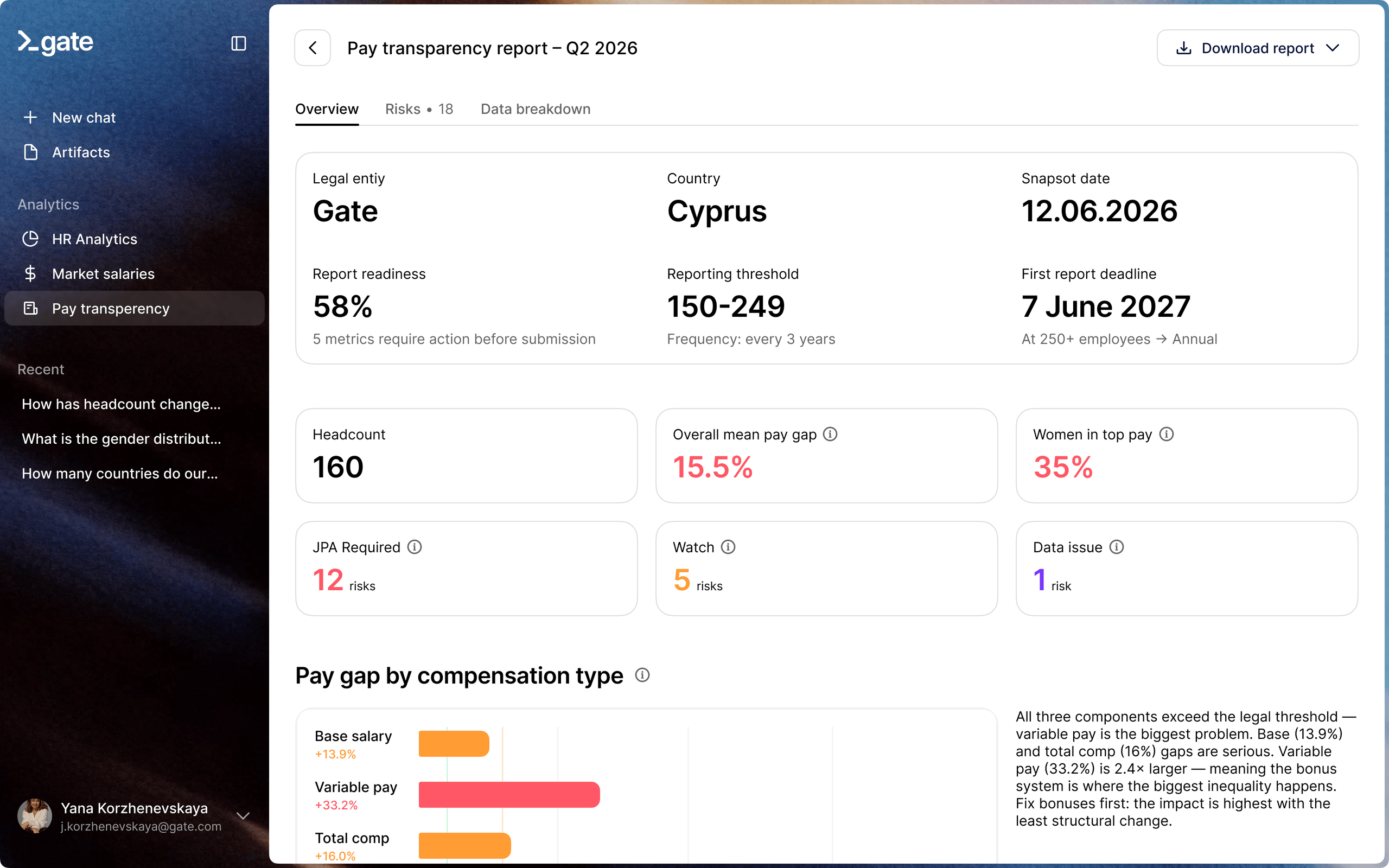
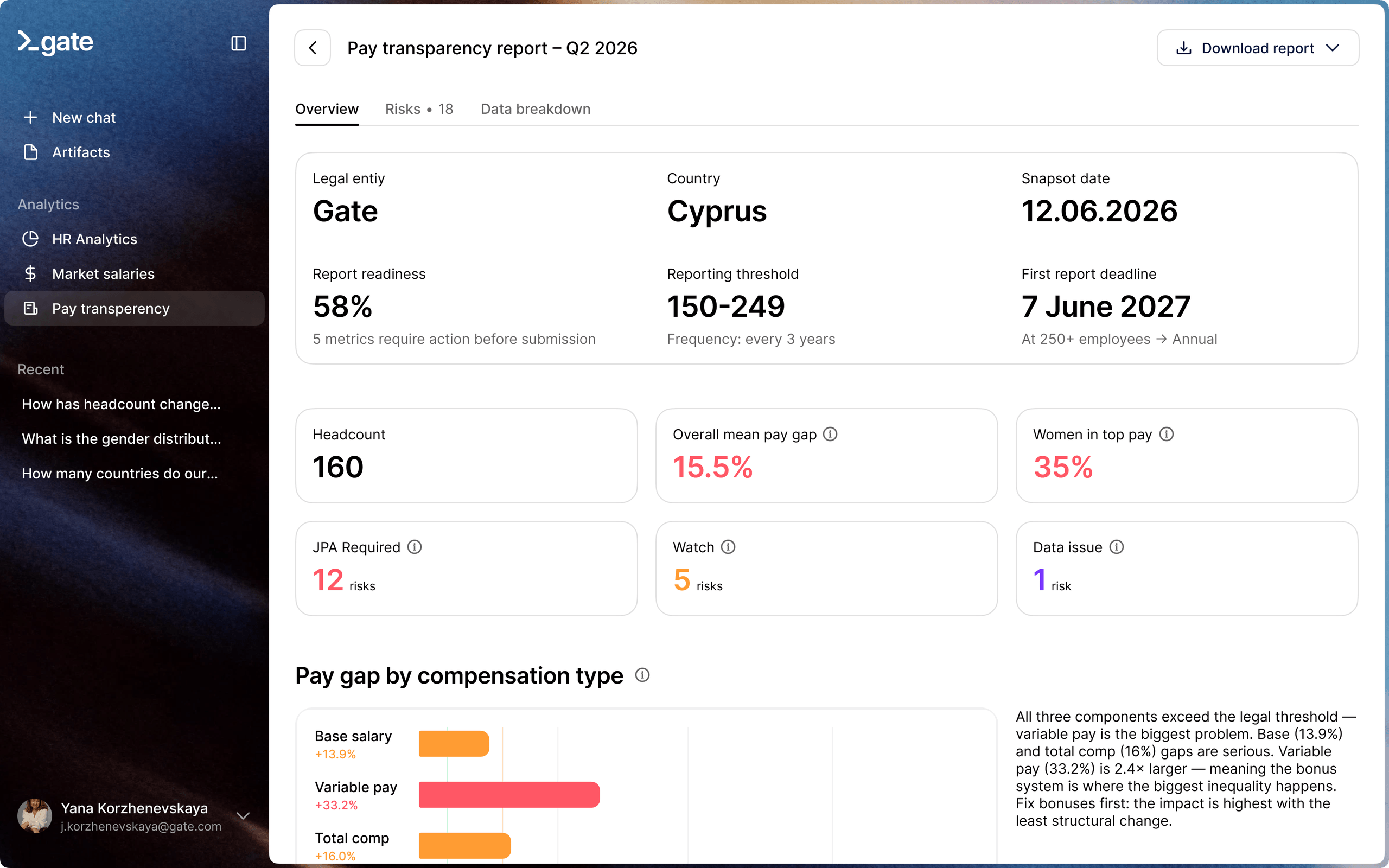
Headcount
160
Overall mean pay gap
15.5%
Women in top pay
35%
JPA Required
12risks
Watch
5risks
Data issue
1risk
The equity risk
You can't fix a gap you can't see.
Pay bands drift. Someone gets a market adjustment, someone doesn't, and eighteen months later there's a gender pay gap nobody planned and nobody can explain. Gate analyzes your pay data to find these gaps and inconsistencies early, before you're explaining them to a regulator, a candidate, or your own team.

Pay gap by compensation type
Base salary
+13.9%
Variable pay
+33.2%
Total comp
+16.0%
All three components exceed the legal threshold — variable pay is the biggest problem. Base (13.9%) and total comp (16%) gaps are serious. Variable pay (33.2%) is 2.4× larger — meaning the bonus system is where the biggest inequality happens. Fix bonuses first: the impact is highest with the least structural change.
One dashboard. Every pay band, scored for risk.
Gate scans your HRIS and payroll data, groups roles into pay bands, and flags what doesn't add up: gender pay gaps, unexplained differences within a band, and roles without a documented salary range. No spreadsheet pivot tables. No manual audit.
What you can do with Pay Transparency
Pay gap analysis
Analyze gender and demographic pay gaps by role and pay band, updated as your data changes.
Pay band risk scoring
See every pay band scored for pay spread, outliers, and missing justification.
Audit-ready reports
Export a clear, audit-ready report when you need to explain your pay data.
Salary range disclosure
Generate salary ranges by role and location for candidate and job-posting disclosure.
Market benchmarking
Compare your pay bands with current market salary data through Salary Market.
Break-the-band alerts
Flag a new hire, pay rise, or promotion that falls outside a pay band before it's finalized.
Before you ask
No. Gate keeps sensitive pay data available only to the people who need it, with access controlled by role. Pay transparency doesn't mean making individual salaries visible to everyone.
No. Gate works with the HR systems you already use. Connect your HRIS and payroll via API or upload a CSV. No data migration and nothing to rebuild.
No. Gate helps your team identify pay gaps, inconsistencies, and reporting risks in your compensation data. It gives legal and compensation teams the analysis they need to investigate and act, but it doesn't replace legal advice or compensation decisions.
You can still use Gate Pay Transparency to analyze pay gaps, review pay bands, benchmark compensation, and identify inconsistencies in your pay data. The EU Pay Transparency Directive is one use case; the underlying pay analytics are useful wherever you need to understand and explain how people are paid.

See your own pay bands
Connect your HRIS, and Gate shows you the pay gaps and risks in your own data in the first session.